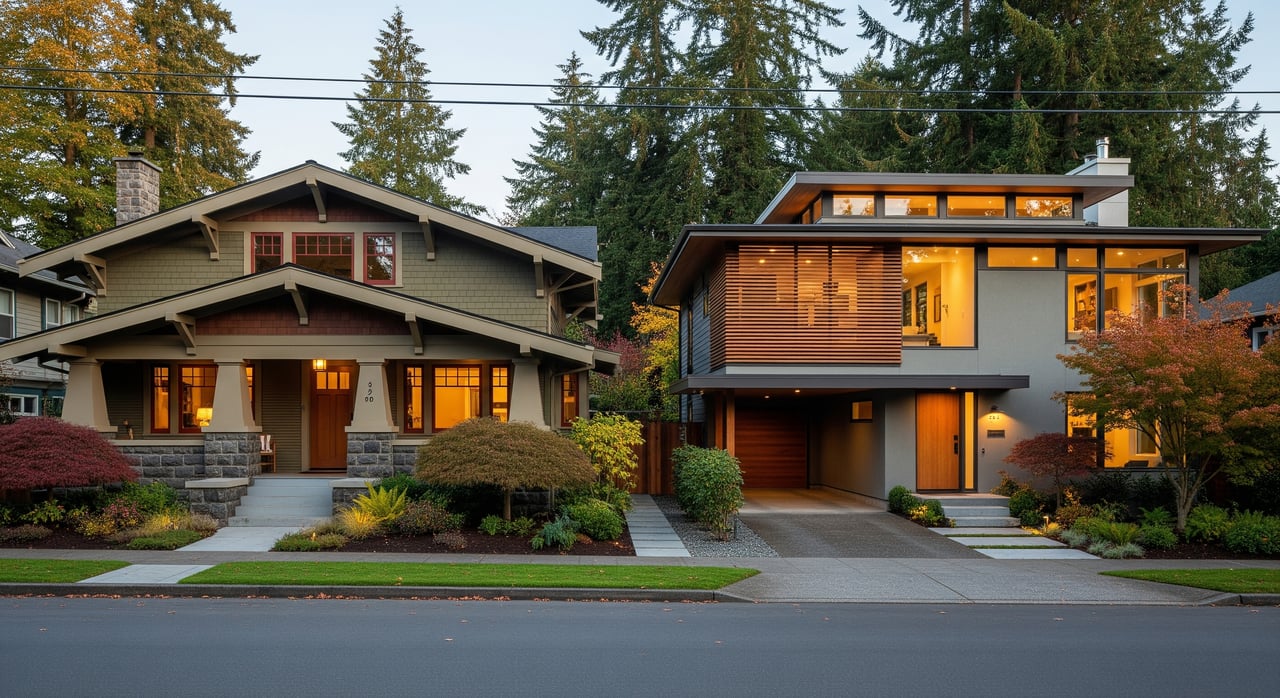
You can walk a few blocks in Northwest Portland and spot two very different classics: the handcrafted warmth of a Craftsman bungalow and the clean lines of a mid‑century home. If you are debating between the two, you are not alone. Each style offers a distinct look, layout, and set of upkeep priorities. In this guide, you will learn how to tell them apart at a glance, what to expect for maintenance and renovations, and which one may fit your lifestyle in NW Portland. Let’s dive in.
Style snapshots in Portland
Craftsman homes in Portland were mostly built from about 1905 to 1930 during the streetcar era. They focus on natural materials, visible joinery, and human scale rooms that feel warm and cozy. Many are part of intact early 20th‑century blocks in walkable areas.
Mid‑century homes arrived later, roughly 1945 to 1975. These houses favor simple forms, open plans, and strong indoor‑outdoor connections. You will often see wider, horizontal layouts, larger windows, and details that highlight the structure.
Curb appeal clues
Craftsman exteriors
- Low to moderate gabled roofs with wide eaves and exposed rafter tails or brackets.
- A prominent front porch, often under the main roof, with tapered columns on stone or brick piers.
- Compact massing, usually one to one‑and‑a‑half stories.
- Multi‑pane upper windows over single panes below, grouped sets, and wide wood trim.
- Wood clapboard or shingles with substantial trim and occasional built‑in planters.
Mid‑century exteriors
- Low‑pitched gable, hipped, or flat roofs that stretch the house horizontally.
- Minimal front porches, with carports or attached garages integrated into the facade.
- Single‑story ranches, split‑levels, or stepped hillside forms.
- Large picture windows, clerestories, and sliding glass doors that link to the yard.
- Mixed materials like wood, brick, stone, concrete block, and glass with little ornament.
How the interiors live
Craftsman interiors
- More defined rooms: entry, living room with fireplace, separate dining, then kitchen.
- Wood trim, wainscoting, built‑ins, and hardwood floors are common.
- Plaster walls and original light fixtures often remain. Some have exposed beams.
Mid‑century interiors
- Flowing or open living, dining, and kitchen areas with long sightlines.
- Simpler trim, sometimes exposed post‑and‑beam structure, and clean‑lined cabinetry.
- Terrazzo or tile may appear in select examples, along with large glass walls to patios.
Where they appear in NW Portland
NW Portland holds a strong early 20th‑century fabric, especially in the historic core often called Nob Hill and the Alphabet District. You will find many intact Craftsman bungalows and period houses on smaller city lots with welcoming porches.
Mid‑century homes are less common in the historic core but do appear on hillside lots, as custom modern builds, and as postwar infill. Many mid‑century properties in NW Portland use wider plans to capture views or to connect living spaces to backyards.
Upkeep and systems to expect
Craftsman maintenance
- Electrical: Some older homes may still have knob‑and‑tube wiring or fused panels. Modernizing to current standards can be a major upgrade.
- Plumbing: Galvanized supply lines and early cast‑iron drains can corrode. Replacement often pairs well with kitchen or bath updates.
- Walls and windows: Plaster repairs need specific skills. Original single‑pane wood windows can be restored or paired with storms to improve comfort.
- Foundations and moisture: Masonry foundations may show settling or moisture intrusion. Basements and crawlspaces merit close inspection.
- Finishes and paint: Pre‑1978 homes can contain lead paint. Plan for safe work practices during renovations.
Mid‑century maintenance
- Roofing: Low‑slope or flat roofs can need more frequent attention. Watch for ponding or membrane issues.
- Windows and glass: Large single‑pane windows are part of the look but are thermally weak. Replacement can be costly and impacts character.
- Structure and slabs: Post‑and‑beam designs may complicate insulation upgrades. Slab‑on‑grade foundations limit basement storage and some retrofits.
- Mechanical systems: Original furnaces, boilers, or radiant systems may be at the end of life. Ductwork and insulation often need review.
- Materials: Asbestos can be present in some floor tiles or roofing underlayment, and some 1960s to 1970s homes used aluminum wiring that needs careful handling.
Renovation potential
Updating a Craftsman
- Pros: You can modernize kitchens and baths while keeping built‑ins, trim, and period charm. Attic or basement conversions can add space.
- Cons: Opening walls for a broad open plan can require structural beams and may remove defining features. Exterior changes in historic districts can trigger design review.
Updating a mid‑century
- Pros: Open plans and post‑and‑beam framing often make layout changes simpler. Single‑story homes adapt well to accessibility and universal design.
- Cons: Improving energy performance while preserving large glass areas is costly. Flat roofs and integrated eaves are sensitive to alteration.
Energy and comfort strategies
Both styles benefit from air sealing, attic insulation, and drainage improvements around the foundation. Heat pump conversions are common in the Pacific Northwest and can reduce operating costs.
Mid‑century homes often work well with ductless mini‑split systems given their zoned, open layouts and exposed walls. In Craftsman homes, you can improve comfort by adding or upgrading ductwork or placing heat pumps with care to preserve trim and built‑ins. Thoughtful window strategies, including storm panels for original wood windows, can balance efficiency with character.
Permits, preservation, and seismic basics
Historic districts
Parts of NW Portland, including the Alphabet Historic District, contain many pre‑WWII homes. If a property is a local landmark or within a local historic district, exterior work can require design review. Standards for materials and visible changes can affect timelines and budgets.
Permits and interior work
Exterior alterations like siding, windows, porches, additions, and structural changes usually need permits. Interior wiring, plumbing, and kitchen or bath remodels also commonly require trade permits, even if the exterior is unchanged.
Seismic upgrades
Portland is in a seismically active region. Older homes can have unreinforced cripple walls, masonry chimneys, or loose foundations. Seismic retrofits such as foundation bolting, plywood sheathing, and chimney bracing are recommended and can be required when you start major structural work.
What to check at a showing
- Look for signs of moisture: stains at ceilings, musty odors, or damp basements.
- Scan roof edges and eaves for sagging, rot, or patchwork repairs.
- Peek at the electrical panel and visible wiring type when allowed.
- Test window operation and look for fogging or cracked panes.
- Check floors and doorways for unevenness that could suggest settlement.
- Note any large additions that may need permit verification.
Quick decision guide
Choose a Craftsman if you value period details, defined rooms, and a classic front porch presence. You are open to targeted system upgrades and want to preserve built‑ins and woodwork.
Choose a mid‑century if you want open flow, strong indoor‑outdoor living, and single‑level layouts. You are ready to plan for roof and glazing performance while keeping clean lines and original character.
Ready to explore homes in NW Portland?
Whether you lean Craftsman or mid‑century, a local, detail‑minded guide can help you evaluate features, flag red flags early, and plan upgrades that protect value. For boutique, hospitality‑level service and thoughtful buyer advocacy, connect with Savanna Ray. Let’s walk a few homes together and find the style that fits how you live.
FAQs
What is the main difference between Craftsman and mid‑century homes in NW Portland?
- Craftsman homes emphasize handcrafted detail, porches, and defined rooms from the early 1900s, while mid‑century homes favor open plans, horizontal lines, and large windows from the postwar era.
Will buying in the Alphabet Historic District limit exterior changes?
- If a property is locally designated, many exterior changes require design review, which can guide materials and visible alterations and may add time and cost to a project.
Which style is easier to convert to an open‑plan layout?
- Mid‑century homes are generally easier to reconfigure due to open framing and single‑story layouts; Craftsman homes can be opened but often need more structural work to keep character.
What inspections should I order for older Portland homes?
- Schedule structural, roof, HVAC, electrical, and plumbing inspections, along with drainage and pest checks; consider a hazardous materials survey and historic guidance if you plan major changes.
Are mid‑century flat roofs a dealbreaker in Portland’s climate?
- Not necessarily, but low‑slope and flat roofs need diligent maintenance and quality membranes; budget for periodic evaluation and timely repairs or replacement.
How do single‑pane windows affect comfort and costs?
- Single‑pane glass is less efficient, so plan for storm windows, targeted replacements, or other upgrades to improve comfort while preserving defining architectural features.
